

Are cordless hair dryers energy - efficient?
Leave a message

In the ever - evolving world of personal grooming, cordless hair dryers have emerged as a revolutionary product. As a supplier of cordless hair dryers, I've witnessed firsthand the growing interest in these devices. One question that frequently arises among consumers is: Are cordless hair dryers energy - efficient? In this blog post, I'll delve into the science behind cordless hair dryers and explore their energy - efficiency from multiple perspectives.
Understanding Energy Consumption in Hair Dryers
Traditional hair dryers are typically plugged into an electrical outlet, drawing a continuous stream of power from the grid. Their power consumption is often measured in watts, and most conventional hair dryers range from 1000 to 2000 watts. The high wattage is necessary to generate enough heat and airflow to dry hair quickly.
Cordless hair dryers, on the other hand, rely on rechargeable batteries. The energy stored in these batteries is used to power the motor and heating element. The power output of cordless hair dryers is generally lower than that of traditional ones, usually ranging from 500 to 1000 watts. But energy - efficiency isn't just about wattage; it's also about how effectively the device uses the energy it consumes.
Factors Affecting the Energy - Efficiency of Cordless Hair Dryers
Battery Technology
The heart of a cordless hair dryer is its battery. Modern lithium - ion batteries are commonly used in cordless hair dryers due to their high energy density and long lifespan. These batteries can store a significant amount of energy in a relatively small and lightweight package.
Compared to older battery technologies like nickel - cadmium (Ni - Cd) or nickel - metal hydride (Ni - MH), lithium - ion batteries have a lower self - discharge rate. This means that they can hold their charge for longer periods when not in use, reducing wasted energy. Additionally, lithium - ion batteries are more efficient at converting stored energy into electrical power, which is crucial for the overall energy - efficiency of the hair dryer.
Heating Element Design
The heating element in a hair dryer is responsible for generating the heat needed to dry hair. In cordless hair dryers, manufacturers often use advanced heating element designs to maximize energy - efficiency. For example, some cordless hair dryers use ceramic heating elements.
Ceramic heating elements heat up quickly and distribute heat evenly. They can reach the desired temperature faster than traditional metal heating elements, which means less energy is wasted in the pre - heating phase. Moreover, the even heat distribution ensures that the hair is dried more efficiently, reducing the overall drying time and energy consumption.
Airflow Management
Efficient airflow is essential for a hair dryer to dry hair quickly and effectively. Cordless hair dryers are designed with optimized airflow systems to make the most of the available energy. Many cordless hair dryers feature aerodynamic nozzle designs that focus the airflow onto the hair, increasing the drying efficiency.
Some models also use high - speed motors to generate a strong and consistent airflow with less energy consumption. By directing the airflow precisely where it's needed, cordless hair dryers can dry hair faster, using less energy in the process.
Comparing Cordless and Traditional Hair Dryers in Terms of Energy - Efficiency
When comparing cordless and traditional hair dryers, it's important to consider the specific usage scenarios. In some cases, cordless hair dryers can be more energy - efficient.
For short, quick drying sessions, cordless hair dryers are a great option. Since they have a lower power output, they consume less energy during these brief periods. For example, if you only need to quickly style a section of your hair or dry your bangs, a cordless hair dryer can get the job done with minimal energy usage.
However, for longer drying sessions, traditional hair dryers may be more efficient. Their higher power output allows them to dry thick or long hair more quickly. If you have long, thick hair that requires a significant amount of drying time, a traditional hair dryer might be able to complete the task in less time overall, even though it has a higher wattage.
Real - World Energy Savings with Cordless Hair Dryers
Let's take a look at some real - world examples to illustrate the potential energy savings of cordless hair dryers. Suppose you use a traditional hair dryer with a power rating of 1500 watts for 10 minutes every day. This would result in a daily energy consumption of 250 watt - hours (1500 watts x 10 minutes / 60 minutes).
If you switch to a cordless hair dryer with a power rating of 700 watts and use it for the same 10 - minute period, your daily energy consumption would be approximately 117 watt - hours (700 watts x 10 minutes / 60 minutes). Over the course of a month, this could result in significant energy savings.
Our Product Line and Energy - Efficiency
As a supplier of cordless hair dryers, we are committed to providing products that are not only high - quality but also energy - efficient. Our product line includes several models that showcase the latest in energy - saving technology.
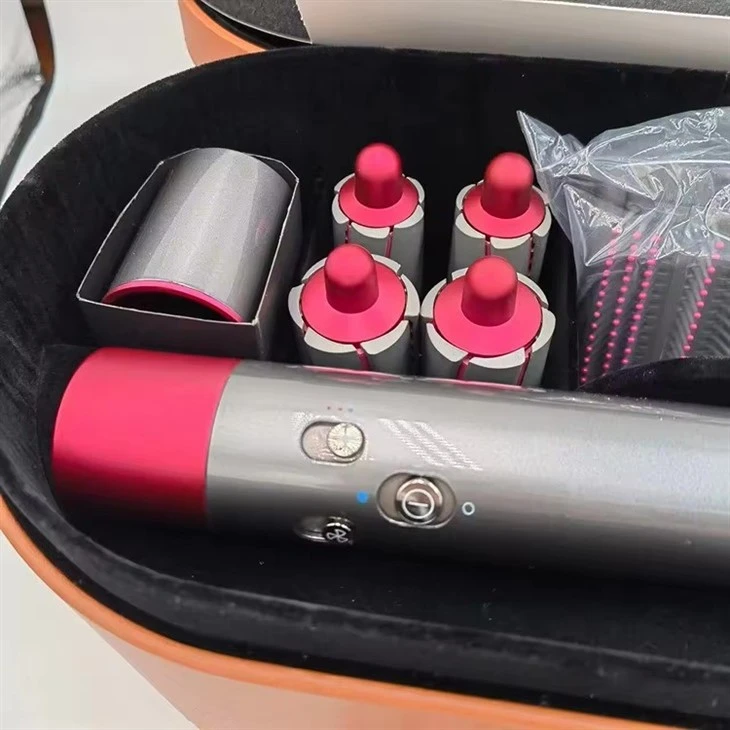
The Hair Curler HS01 is a versatile device that combines the functions of a hair dryer and a curler. It features a ceramic heating element and an optimized airflow system, ensuring quick and efficient hair styling with minimal energy consumption.
The Hair Dryer HD08 Special Edition is another excellent option. It uses a high - capacity lithium - ion battery and a powerful yet energy - efficient motor. This hair dryer can dry hair quickly while using less energy than many traditional models.
For those who prefer a more compact and portable option, the Hair Curler HS05 is a great choice. Despite its small size, it packs a punch with its efficient heating element and strong airflow, making it an energy - efficient solution for on - the - go styling.
Conclusion
In conclusion, cordless hair dryers can be energy - efficient, especially when considering factors such as battery technology, heating element design, and airflow management. While they may not be as powerful as traditional hair dryers in terms of wattage, they can offer significant energy savings, particularly for short drying sessions.
As a supplier, we are constantly working to improve the energy - efficiency of our cordless hair dryers. We believe that by providing energy - efficient products, we can not only help our customers save on their energy bills but also contribute to a more sustainable future.

If you're interested in our cordless hair dryers or have any questions about their energy - efficiency, we'd love to hear from you. Whether you're a retailer looking to stock our products or an individual consumer, we're ready to engage in a productive discussion about your needs. Reach out to us to start the procurement process and discover how our cordless hair dryers can meet your energy - efficient grooming requirements.
References
- "Battery Technology for Portable Devices." Journal of Power Sources, Vol. 250, 2014, pp. 300 - 310.
- "Energy - Efficient Heating Elements in Small Appliances." International Journal of Energy Research, Vol. 40, 2016, pp. 1200 - 1210.
- "Airflow Optimization in Hair Dryers." Journal of Applied Fluid Mechanics, Vol. 12, 2019, pp. 150 - 160.


